
Thermal drone inspection is an advanced method of assessing assets using a thermal imaging camera mounted on a UAV. This technology detects temperature variations and generates detailed thermal images, enabling precise analysis of infrastructure and building performance.
As a result, thermal drone inspections allow for fast and effective identification of issues that are not visible to the naked eye—such as heat loss, moisture intrusion, insulation defects, or overheating components—supporting early intervention and reducing the risk of costly failures.
What is thermography and how does it work?
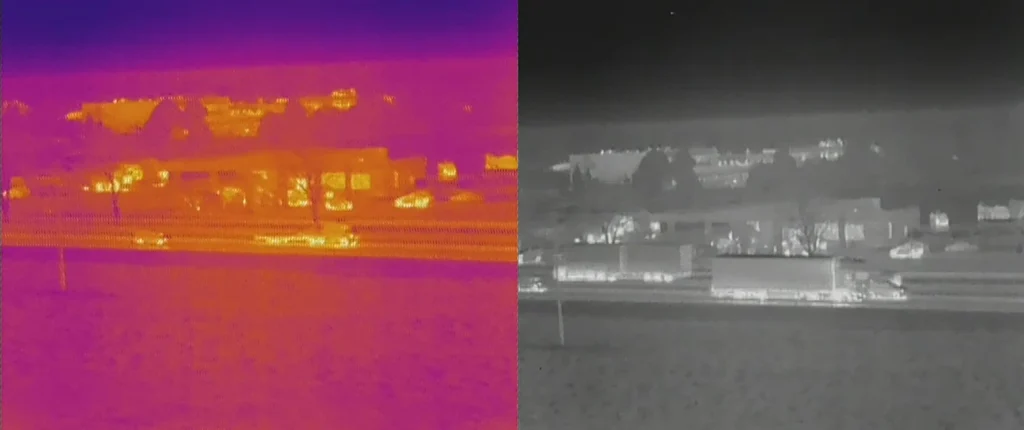
Thermography is a technology that enables the detection and measurement of infrared radiation emitted by objects. Thermal cameras capture this radiation and convert it into thermal images, where temperature differences are represented through colour variations. The colour palette can be adjusted as needed, but typically warmer areas appear brighter on the thermal image.
Drone-based thermal inspections operate on the same principle. UAVs equipped with thermal cameras fly over the inspected asset and generate thermal imagery, which can then be analysed by specialists. This allows for rapid identification of areas with abnormal temperatures and enables timely corrective action.
The technology behind thermal cameras in drones
Thermal cameras are devices that enable the detection and measurement of object temperatures from a distance. This technology uses infrared radiation to create images that visualise temperature distribution across the inspected asset. As a result, even the smallest temperature variations can be identified, allowing for precise detection of potential issues.
Drones equipped with thermal cameras combine advanced technology with mobility and ease of deployment. They enable thermal inspections from virtually any angle, allowing assets to be analysed from all sides. Importantly, drones can access areas that are difficult, hazardous, or impossible for humans to reach.
Thermal imaging technology used in drones is highly precise and reliable. It enables the detection of even subtle temperature anomalies, which is critical in many types of inspections. UAV-based thermal systems are widely used in building diagnostics, industrial inspections, agriculture, and many other sectors where early detection of issues is essential.
Benefits of drone-based thermal inspections
Drone-based thermal inspections offer significant advantages over traditional inspection methods. One of the key benefits is the ability to conduct inspections from the air, making it possible to assess hard-to-reach areas such as roofs, façades, or industrial installations. This enables fast and efficient analysis of large sites and complex assets, significantly reducing inspection time.
Another major advantage is speed and precision. Drones can perform thermal inspections much faster than conventional methods, saving both time and resources. At the same time, high-resolution thermal imagery allows for accurate identification and localisation of issues—often analysed remotely, from the comfort of the office.
Applications of drone-based thermal inspections
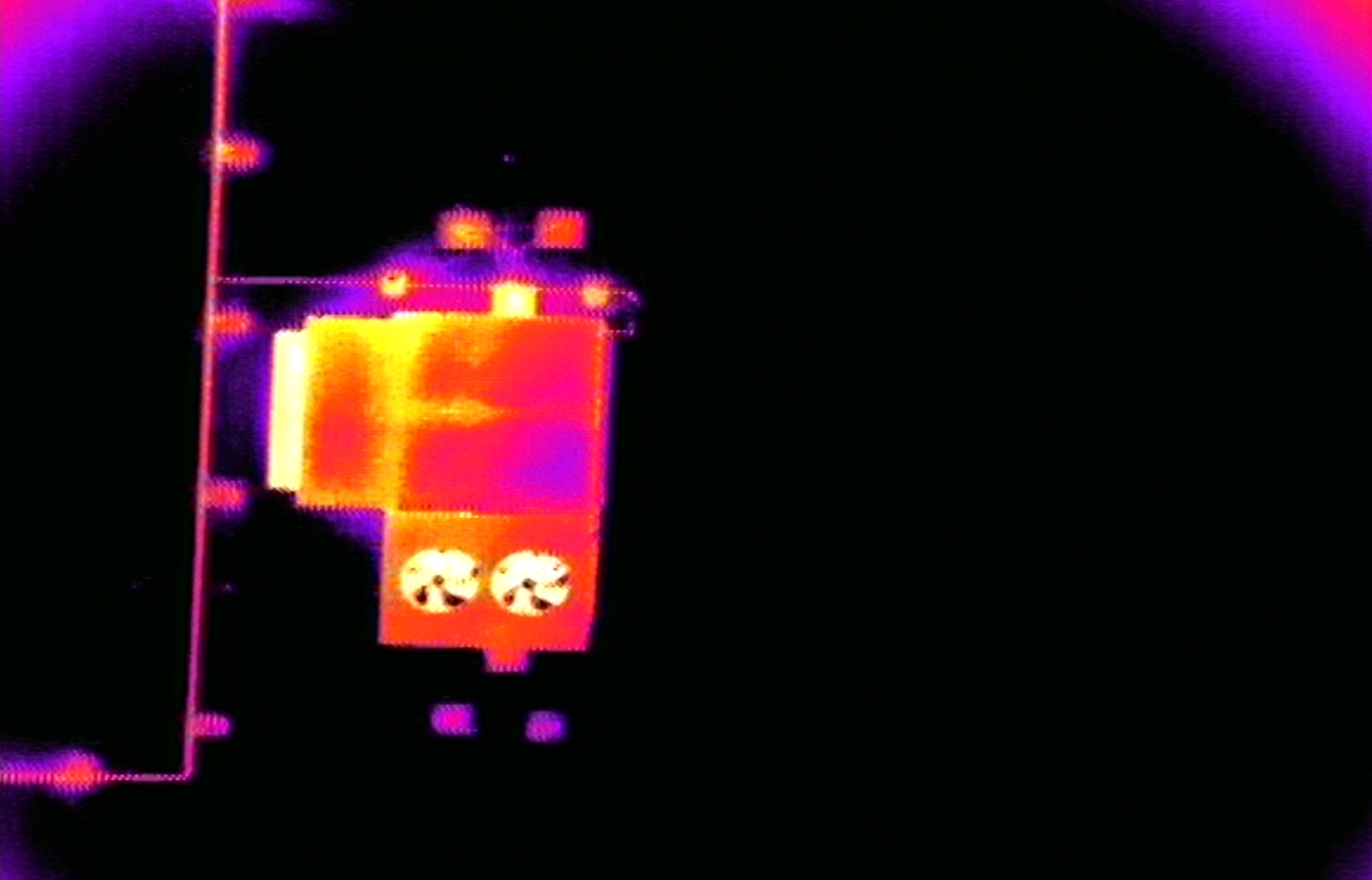
Drone-based thermal inspections are widely used across multiple industries and applications. One of the most common use cases is building and infrastructure inspection. Drones can assess façades, roofs, electrical systems, and HVAC installations—enabling rapid detection of issues such as heat loss, moisture intrusion, or insulation defects.
In industrial environments, drones are used to inspect critical assets including pipelines, power lines, energy storage systems, photovoltaic and wind farms, thermal storage units, cooling towers, and ventilation systems. Thermal inspections allow for early detection of overheating components or leaks, helping to prevent costly failures and unplanned downtime.
Drone-based thermography is also highly effective in photovoltaic inspections. UAVs can scan solar panels to identify damaged or underperforming modules and support energy yield optimisation. With regular monitoring, it is possible to assess and predict panel degradation over time. The collected data can also serve as reliable documentation—for installation verification, asset valuation during transactions, insurance claims, or warranty-related assessments.
Thermal drone inspection workflow
A drone-based thermal inspection consists of several key stages required to ensure accurate and professional results. The process begins with obtaining the necessary flight permissions for the selected area or asset. Next, the appropriate UAV and thermal camera configuration is selected to match the specific inspection requirements. The drone is then deployed to capture high-resolution thermal imagery of the site.
Once the flight is completed, the collected data is analysed by specialists who identify areas with abnormal temperature patterns. The outcome is a detailed inspection report, including identified issues and recommendations for corrective actions or further investigation.
Proper preparation is essential to ensure reliable results. This includes careful flight planning to guarantee full site coverage and defining the types of anomalies to be assessed. Weather conditions must be suitable—ideally dry, with low wind (below 8 m/s) and stable atmospheric conditions. The inspected site should also be prepared in advance according to technical guidelines, which may require actions taken several hours prior to the inspection.
Safety and measurement accuracy are equally important. The inspection area should be cleared of objects that could affect readings (such as vehicles, containers, or loose materials), and the site should be properly secured. Informing stakeholders in advance and ensuring appropriate on-site safety measures—such as marked zones and high-visibility clothing—helps ensure smooth and compliant operations.
Following these steps ensures an efficient, safe, and reliable inspection process, delivering precise and actionable results.
How to maximise the value of drone-based thermal inspections
To fully leverage the potential of thermal drone inspections, it is essential to follow a few key principles. First, trust the expertise of inspection specialists and adhere to their recommendations—both during preparation and throughout the inspection process. Proper execution directly impacts the accuracy and usefulness of the results.
Equally important is preparing the site in advance and informing all relevant stakeholders about the planned inspection. Ensuring the area is ready and accessible helps avoid disruptions and improves the quality of the collected data.
Finally, acting quickly on the findings is critical. Implementing recommended repairs without delay helps prevent further asset degradation and reduces the risk of higher costs in the future.
Summary: The future of inspection with drone-based thermal technology
Drone-based thermal inspections represent a rapidly growing and high-potential approach to asset assessment. By combining advanced UAV platforms with thermal imaging technology, it is possible to carry out fast, accurate inspections across multiple industries. These inspections enable the detection of issues invisible to the naked eye—helping to prevent failures and improve the overall performance and reliability of infrastructure.
Looking ahead, the capabilities of thermal drone inspections will continue to evolve. Real-time defect detection during flights and faster anomaly analysis powered by artificial intelligence will further enhance efficiency. Regular inspections will enable the development of digital twins and allow for the simulation of asset degradation over time. Additionally, reports will increasingly be enriched with cost estimates for maintenance and modernisation—supporting more informed and data-driven decision-making.